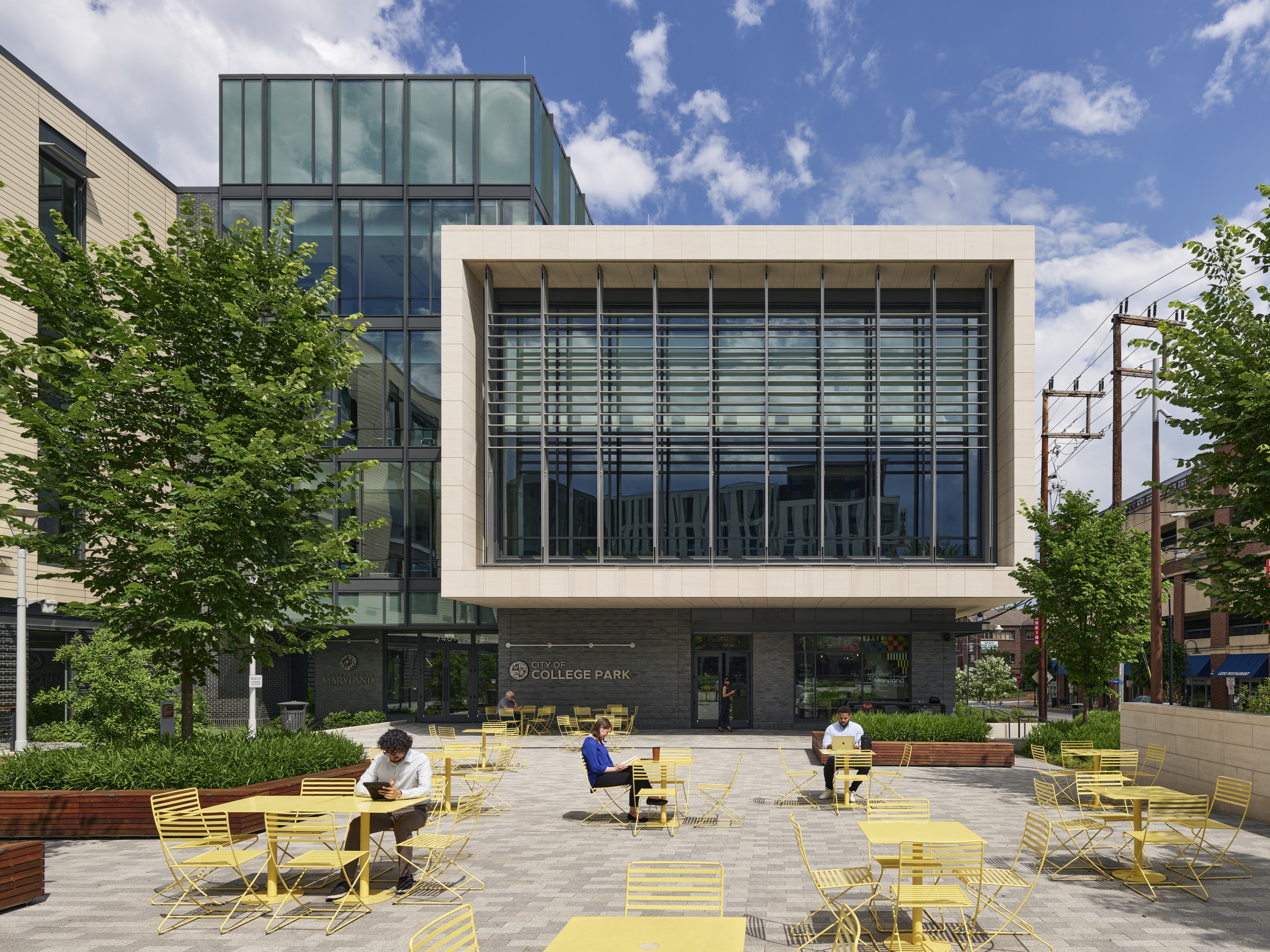
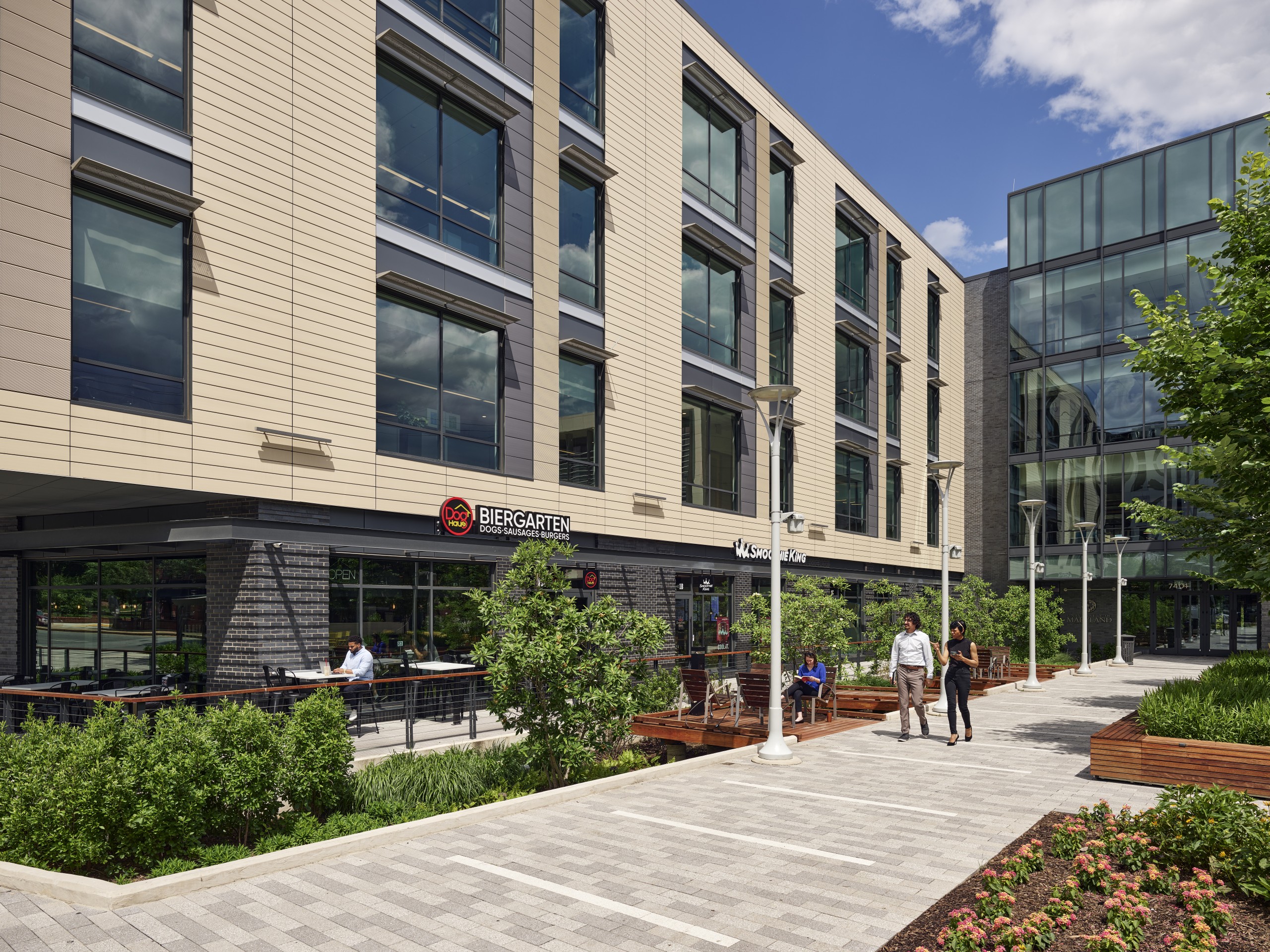
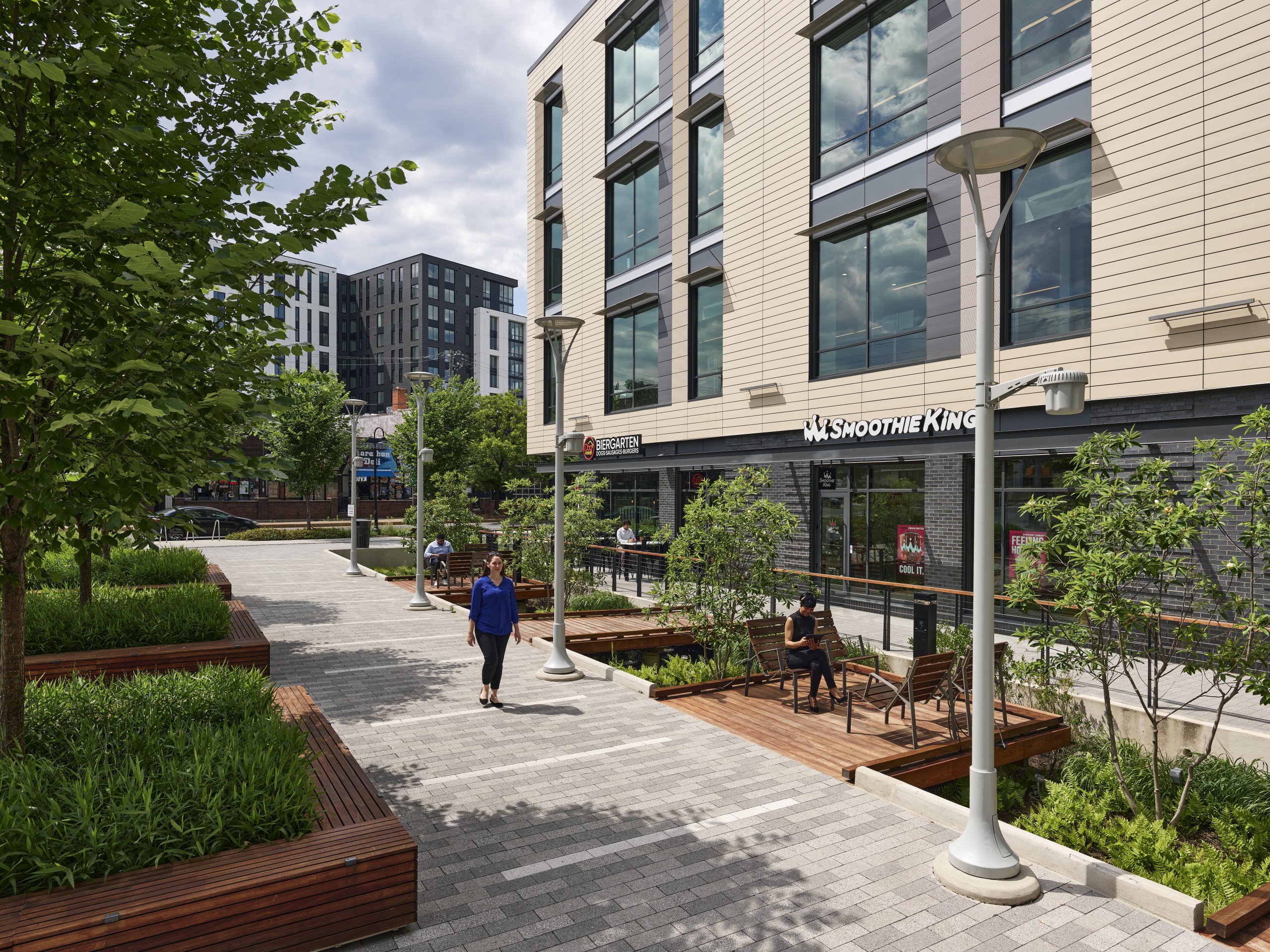
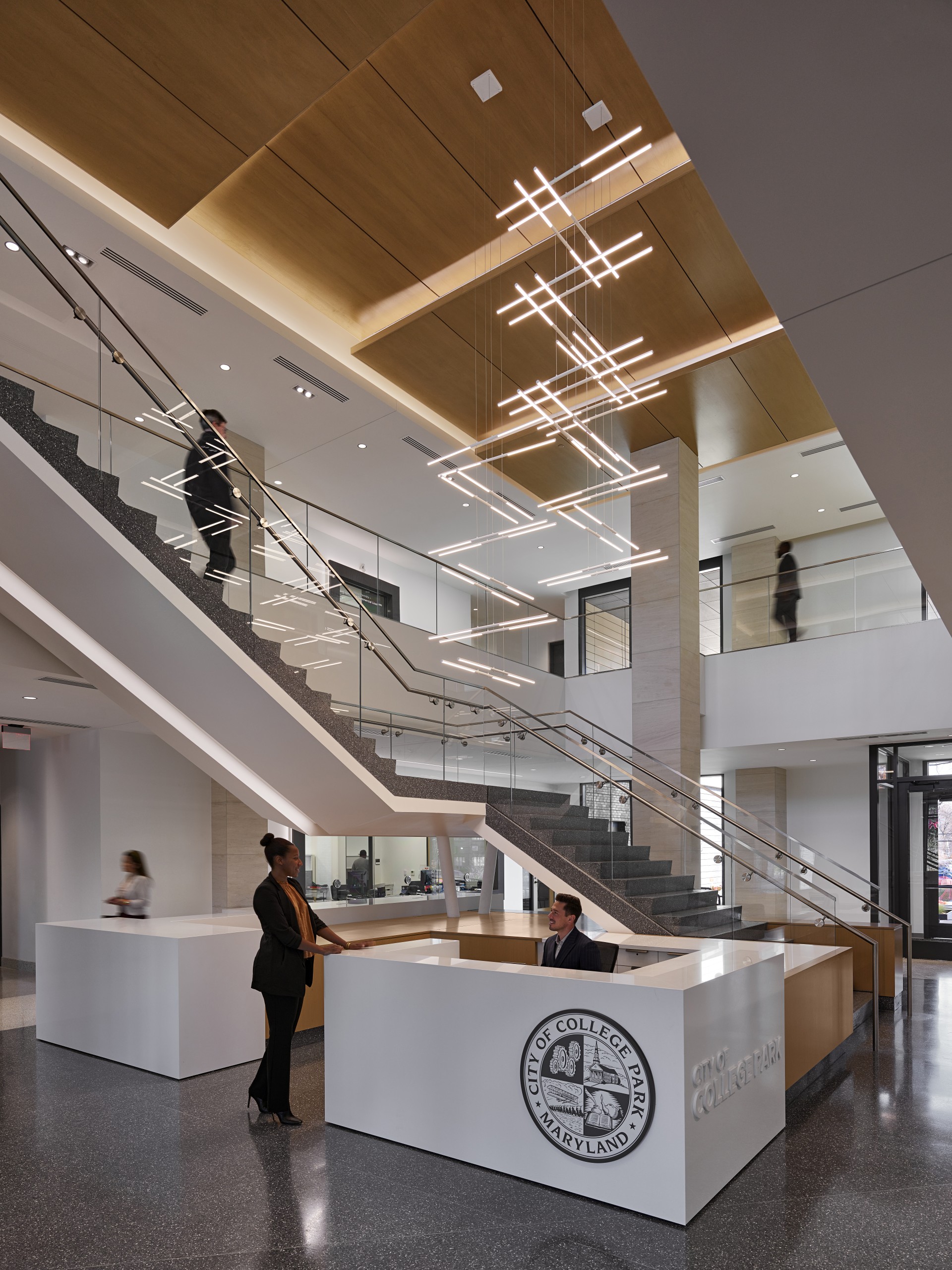
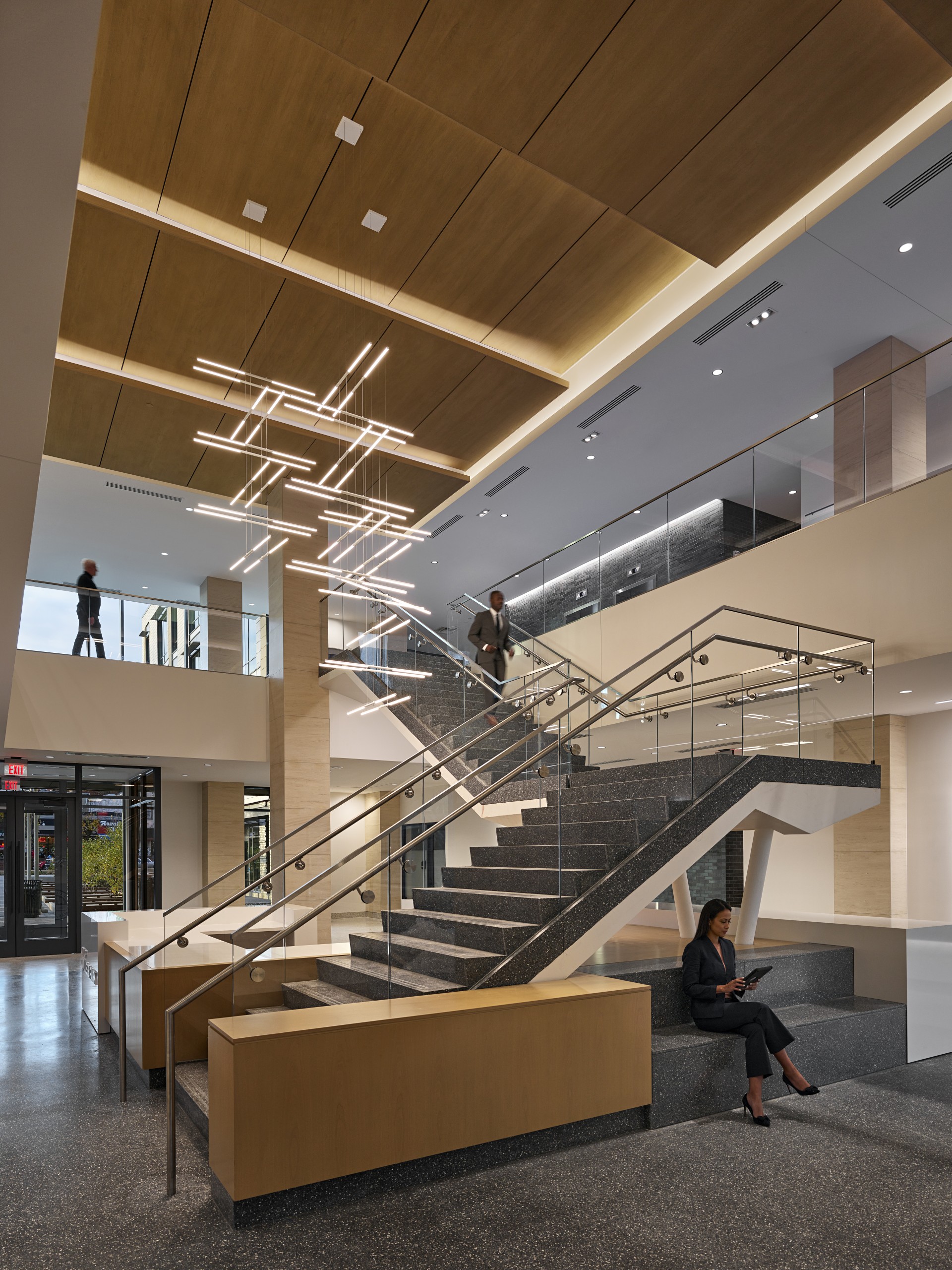
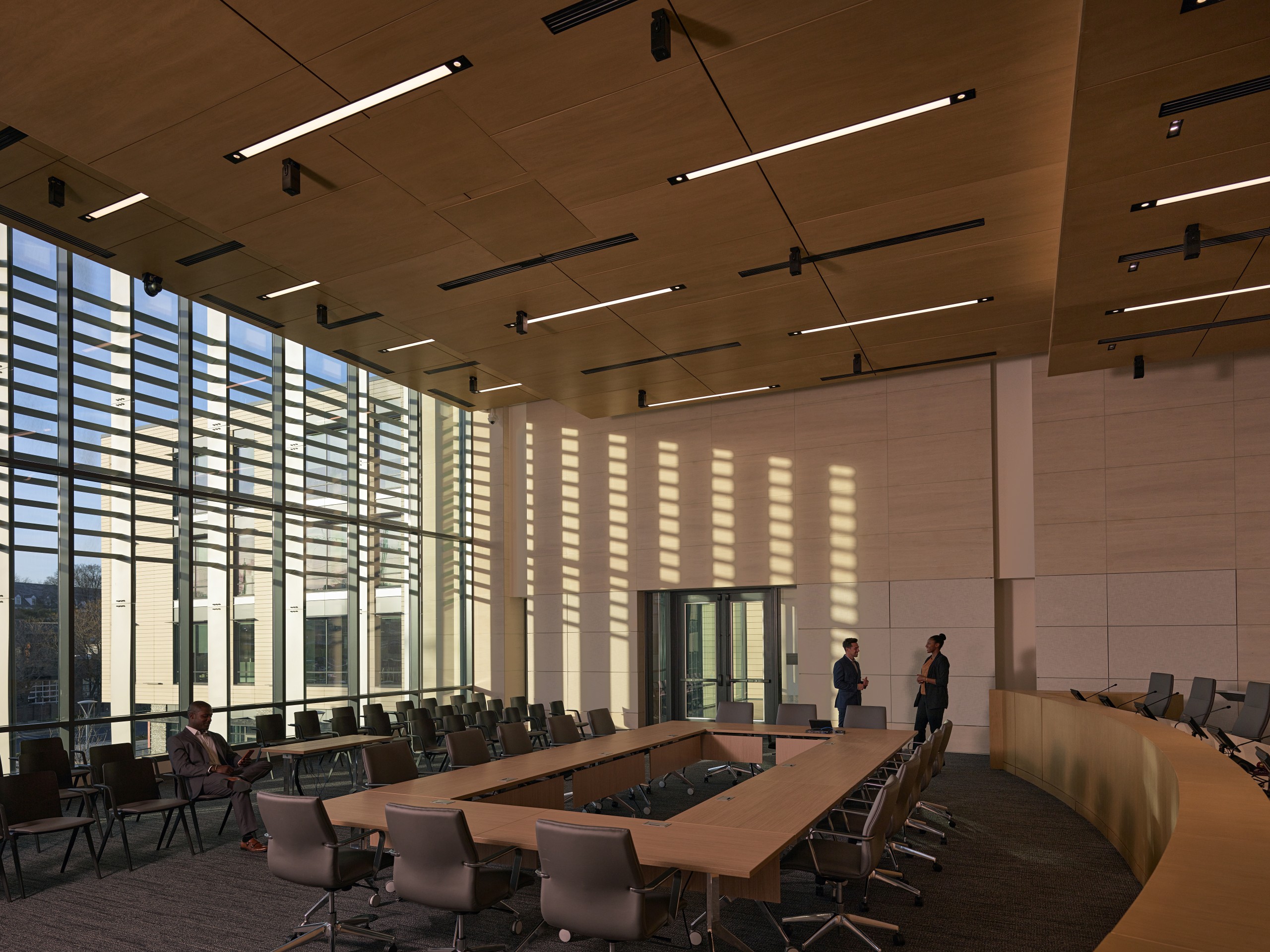
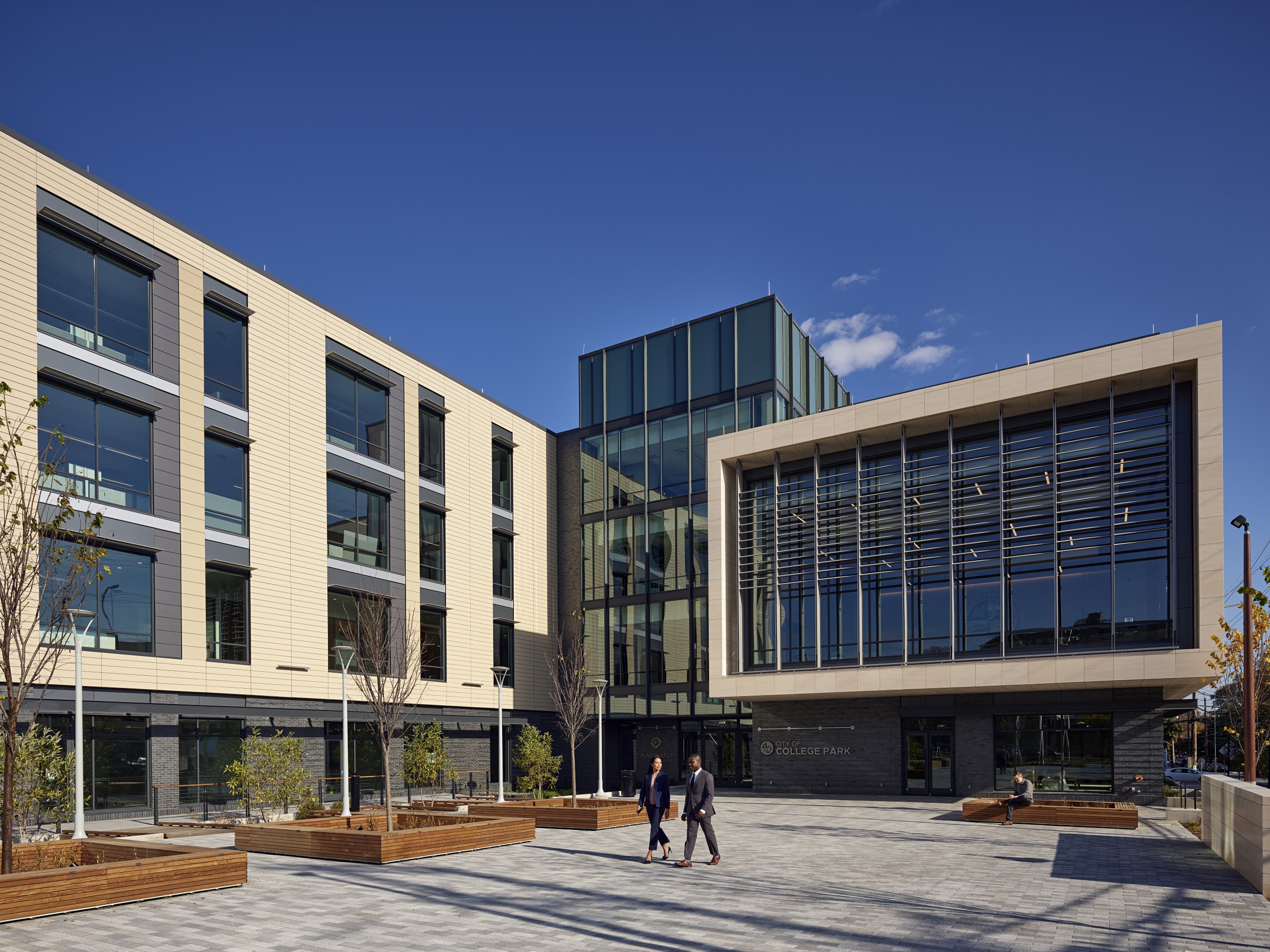
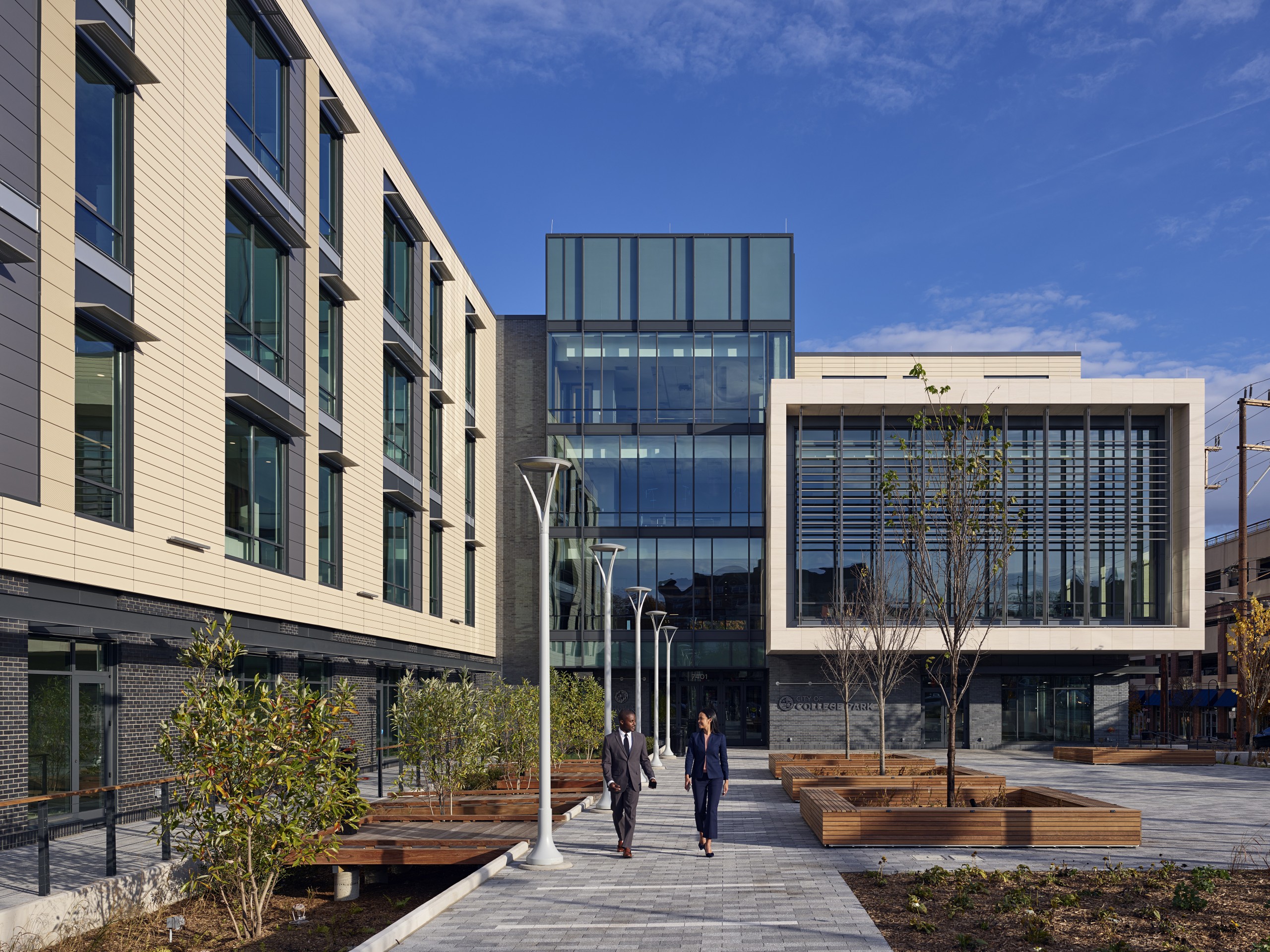
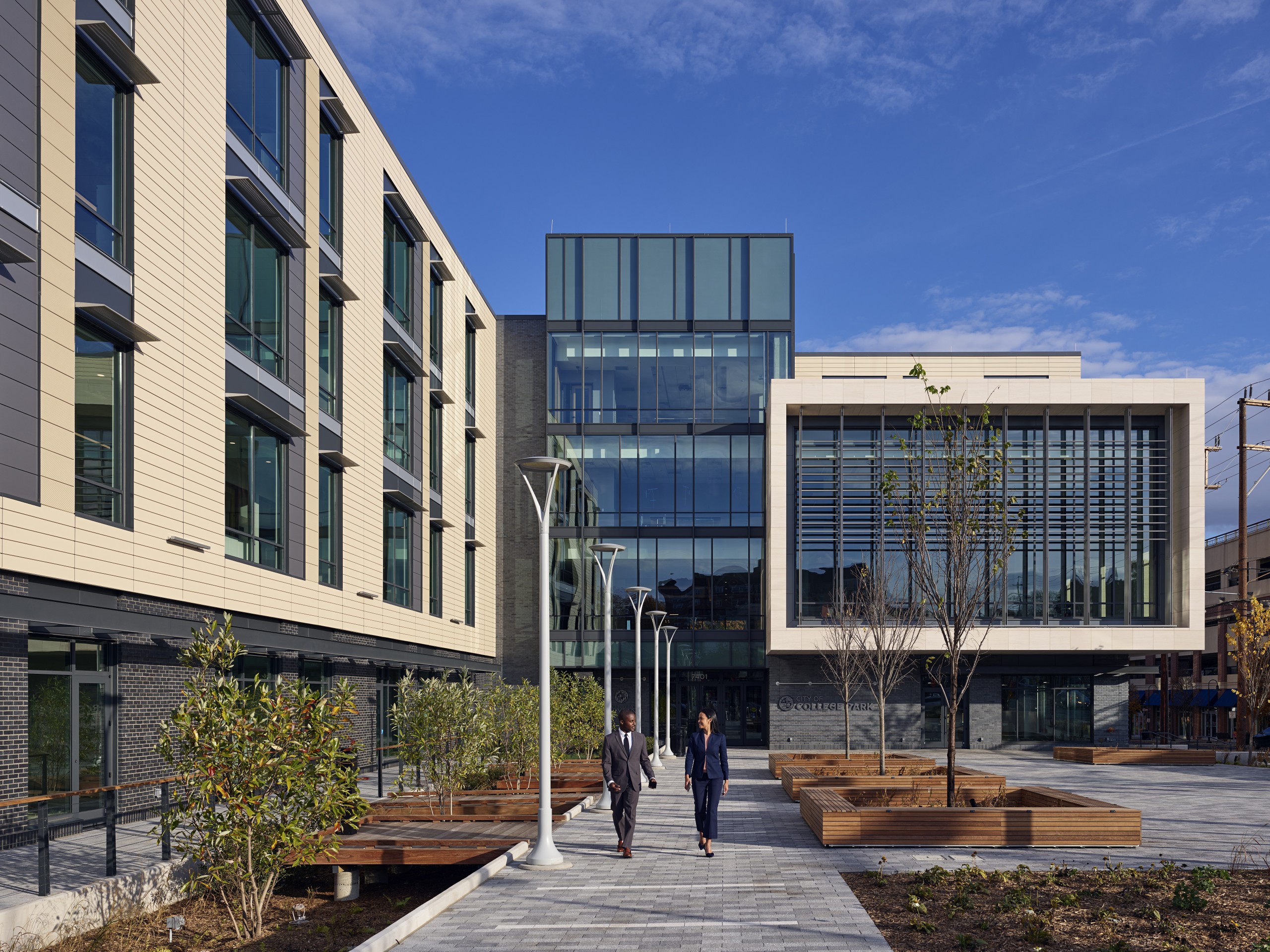
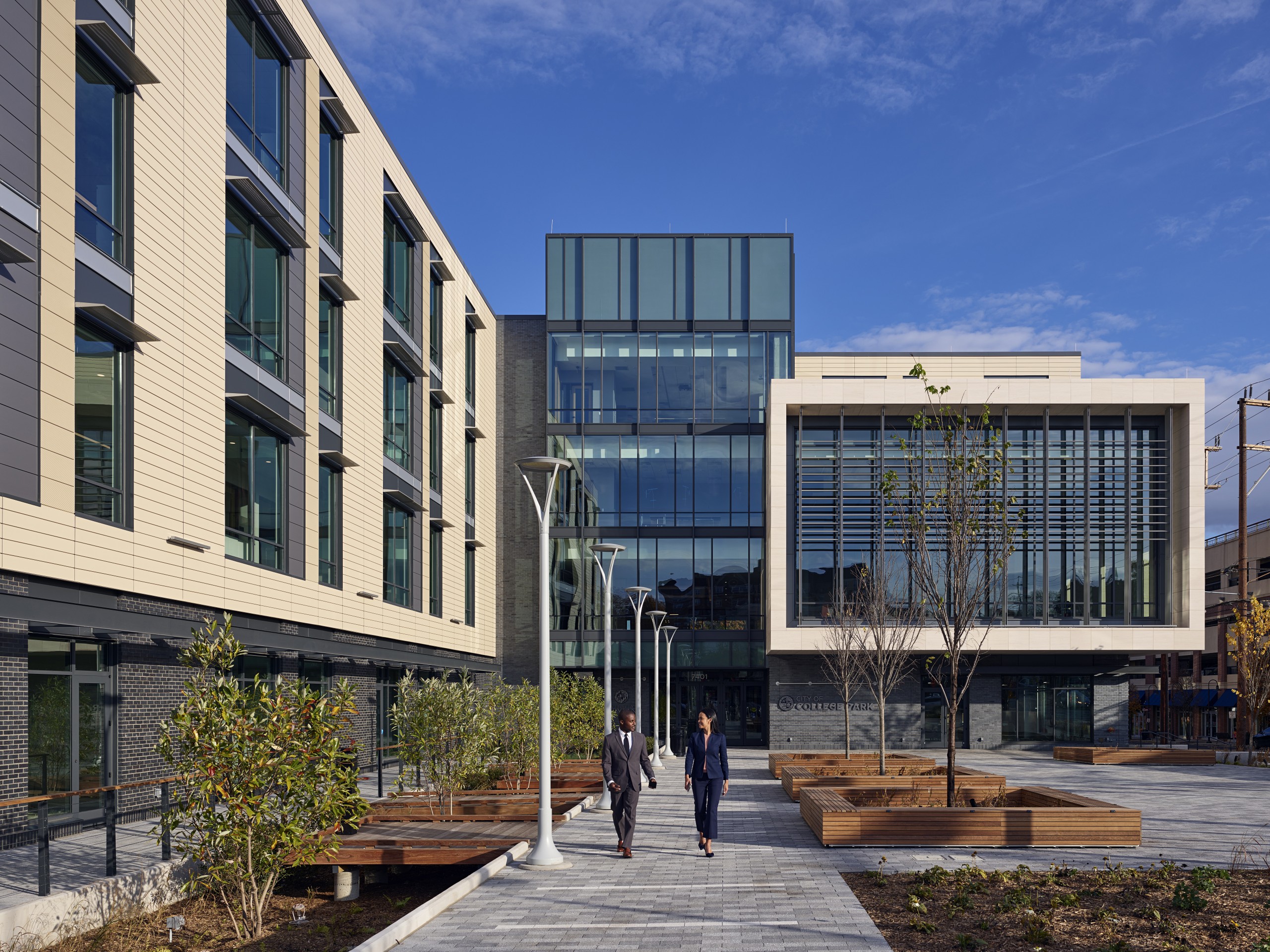
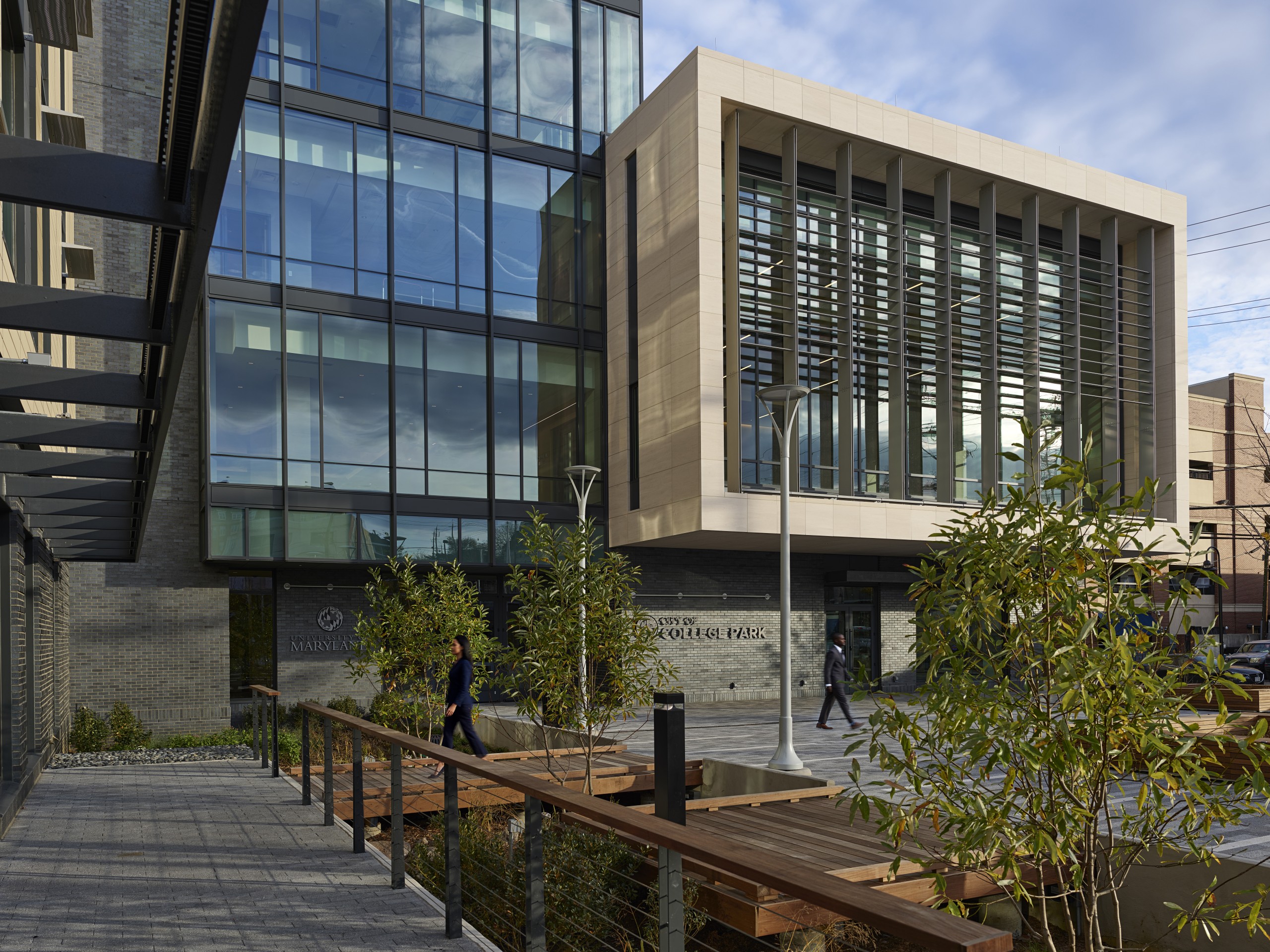
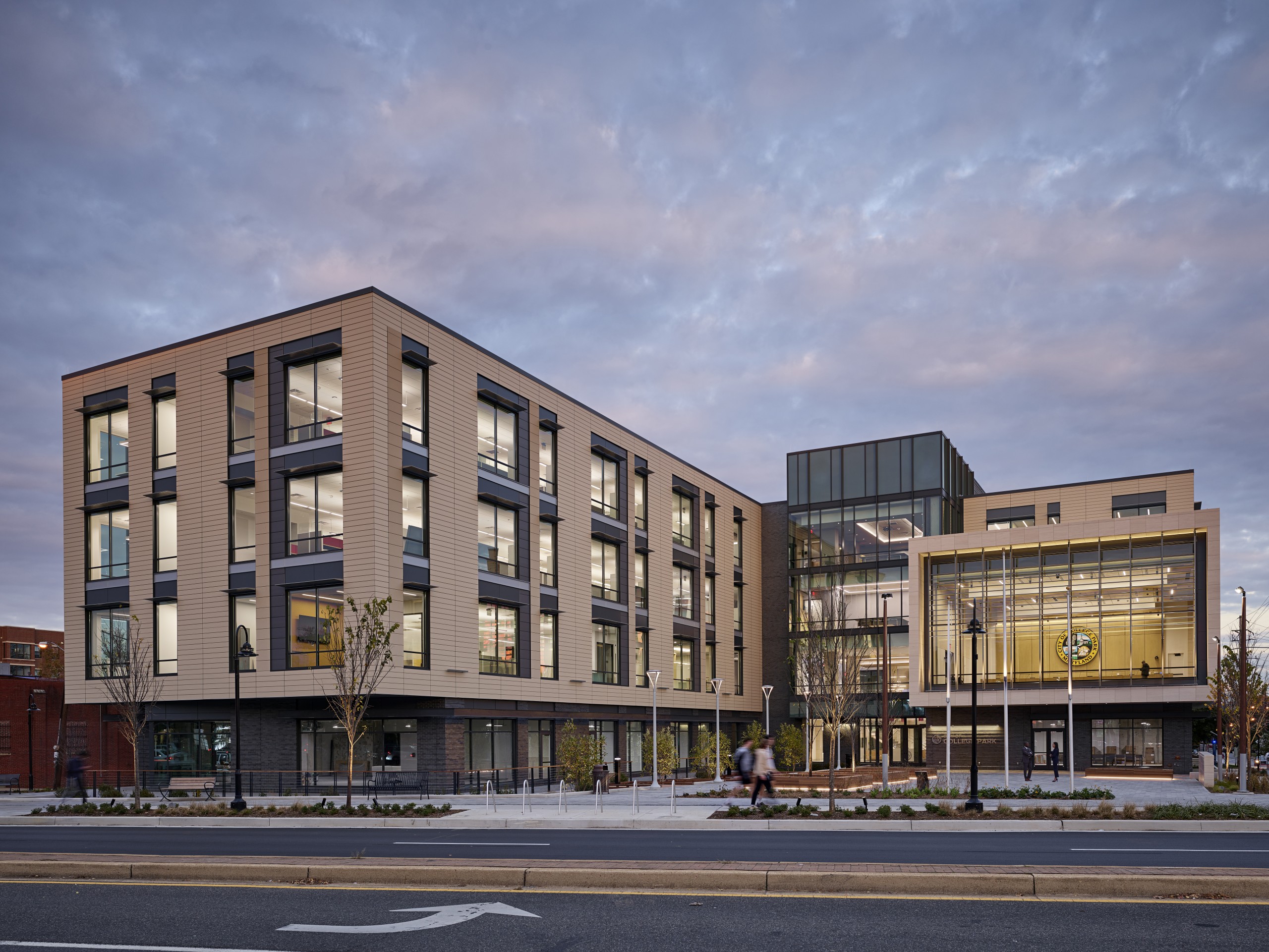
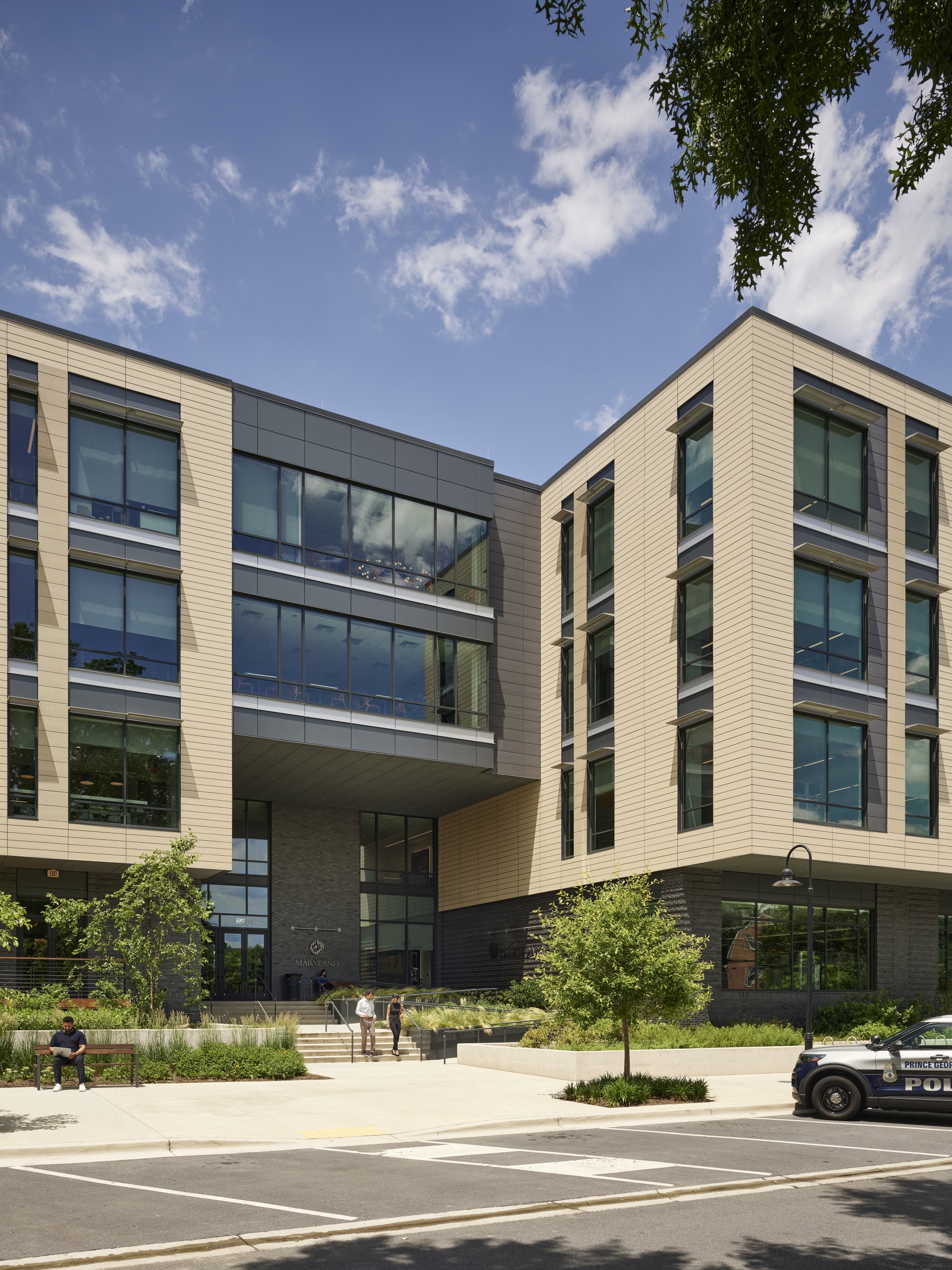
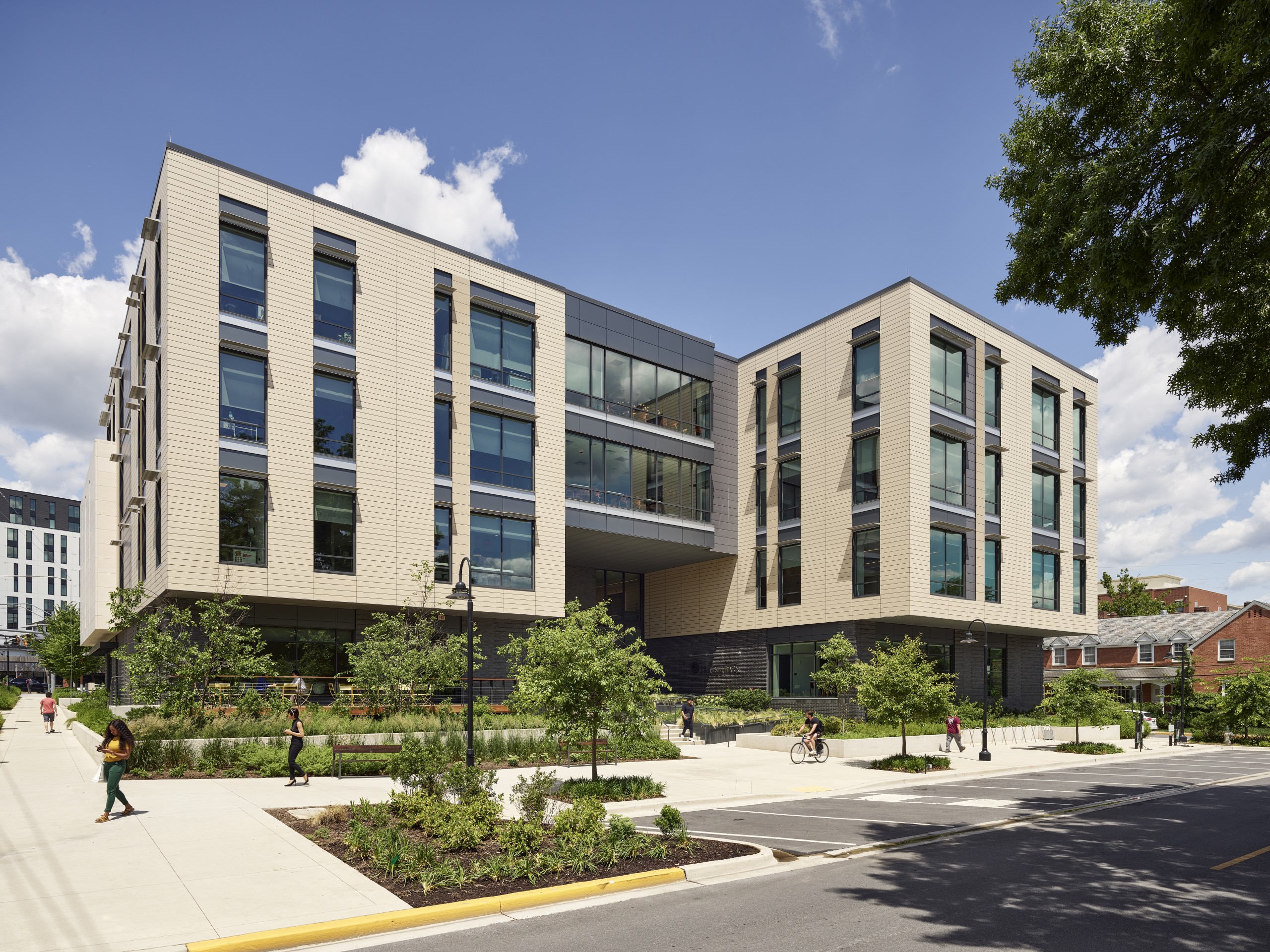
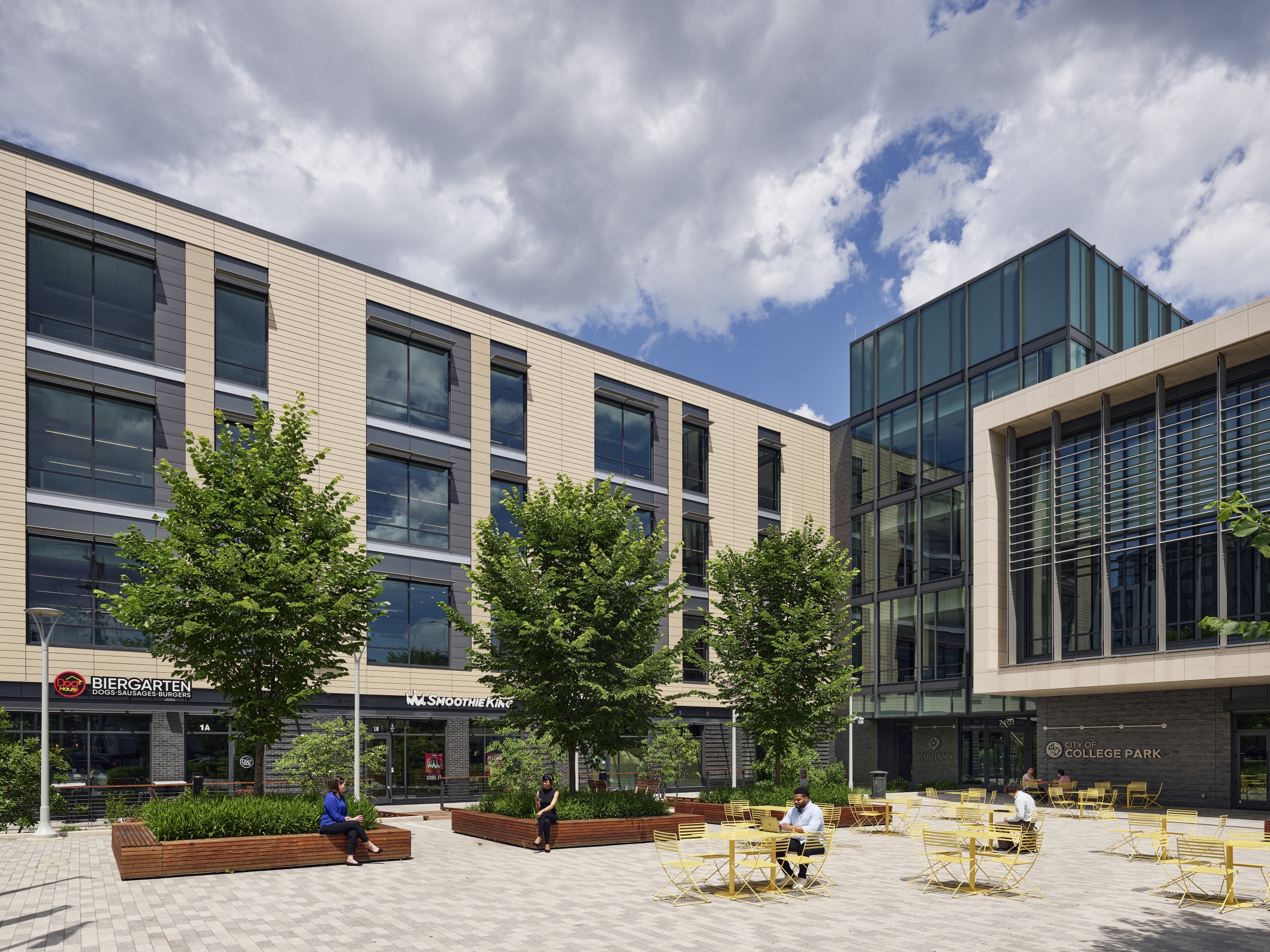
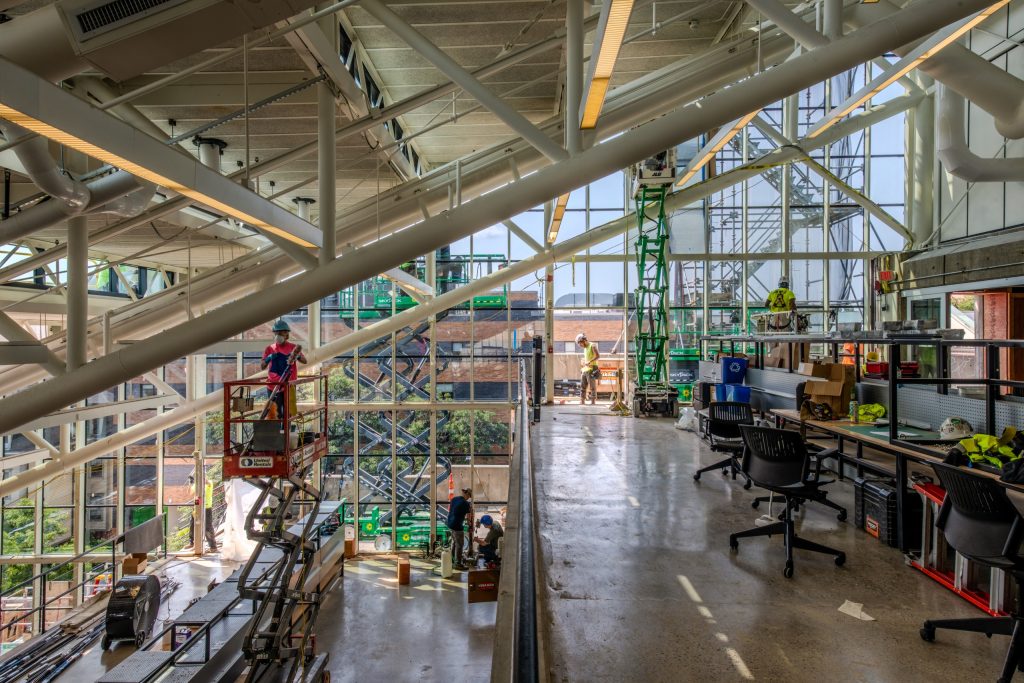
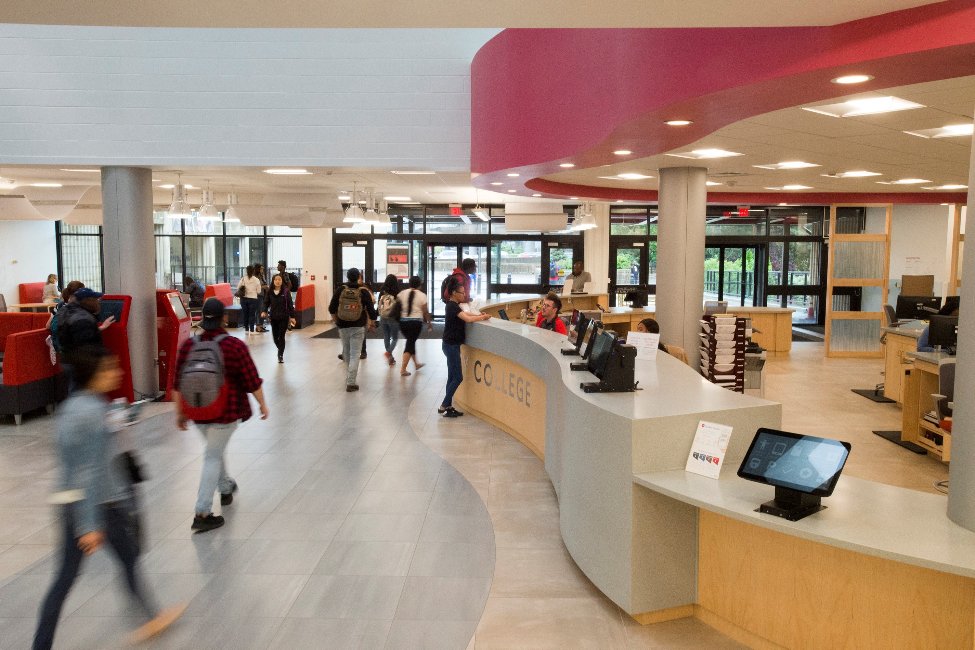
For more than 150 years, the University of Maryland (UMD) has been a defining presence in the City of College Park. As both institutions looked ahead, leaders recognized an opportunity to transform the downtown into a more vibrant, diverse, and walkable community that could better serve residents, attract top faculty and students, and stimulate research and entrepreneurship. This shared vision inspired a first-of-its-kind partnership between the City and the University, who enlisted Redgate as a neutral development manager to guide the effort. The project transformed a prominent downtown block into a modern City Hall and University office building, while creating a dynamic civic destination featuring retail space, community meeting rooms, and a public plaza. Redgate’s role was to manage a complex process with multiple owners, a tight urban site, and competing priorities.
Our team led consultant and contractor selection, guided programming and design, and provided disciplined oversight of budget and schedule. Every decision required joint approval from the City and UMD, demanding transparent communication and careful alignment of goals. Key milestones included navigating entitlements, coordinating with Prince George’s County planners, and resolving differing stakeholder needs without jeopardizing schedule or cost. Redgate also structured a condominium ownership model that clearly defined responsibilities for the City, UMD, and Terrapin Development Corporation, allowing the partners to share space while retaining autonomy. When the pandemic disrupted construction and shifted retail demand, Redgate helped value-engineer the design to rebalance costs while maintaining program quality.
The award-winning, 100,000 SF LEED Gold City Hall includes 60,000 Square Feet of University of Maryland office space, 33,000 Square Feet of government offices and council chambers, and 7,000 Square Feet of ground-floor retail. At its center is a public plaza that draws residents, students, and visitors with outdoor seating, community events, and active storefronts. The project reflects the power of partnership, transforming a shared vision into a civic and academic hub that now serves as a model for university-city collaboration nationwide.